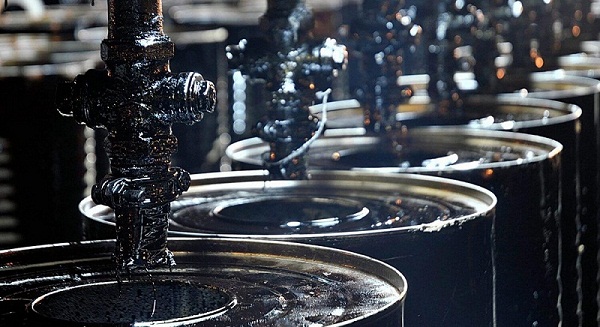
Bitumen is a natural derivative of crude oil, and is a complicated mixture of hydrocarbons. For over 5000 years, some form of bitumen has been used as a waterproofing and/or bonding agent; its earliest recorded use was by the Sumerians around 3800 BC. The modern use of bitumen for roads started rising rapidly in the 1920s; today, over 75Mt of bitumen per year is used worldwide, and this demand is still rising. The chemical composition and internal structure of bitumen are extremely complicated, but most bitumens contain 82-88% carbon, 8-11% hydrogen, 0-6% sulphur, 0-1.5% oxygen, and 0-1% nitrogen. The main chemical constituents are asphaltenes and maltenes, the latter being subdivided into resins, aromatics, and saturates. Bitumen is made by multistage distillation of special types of crude oil, which must contain sufficient bitumen and have suitable chemical composition. The distillation process occurs in a distillation or fractionating column. In the first distillation, crude oil is heated to 300-350 degrees C, and in the second distillation, around 400 degrees C, a liquid called ‘the short residue’ is obtained, which can be used to produce over 20 different grades of bitumen. The residue may be modified further by air blowing.